Leadership · 23 October 2026
Leadership Is a System, Not a Personality
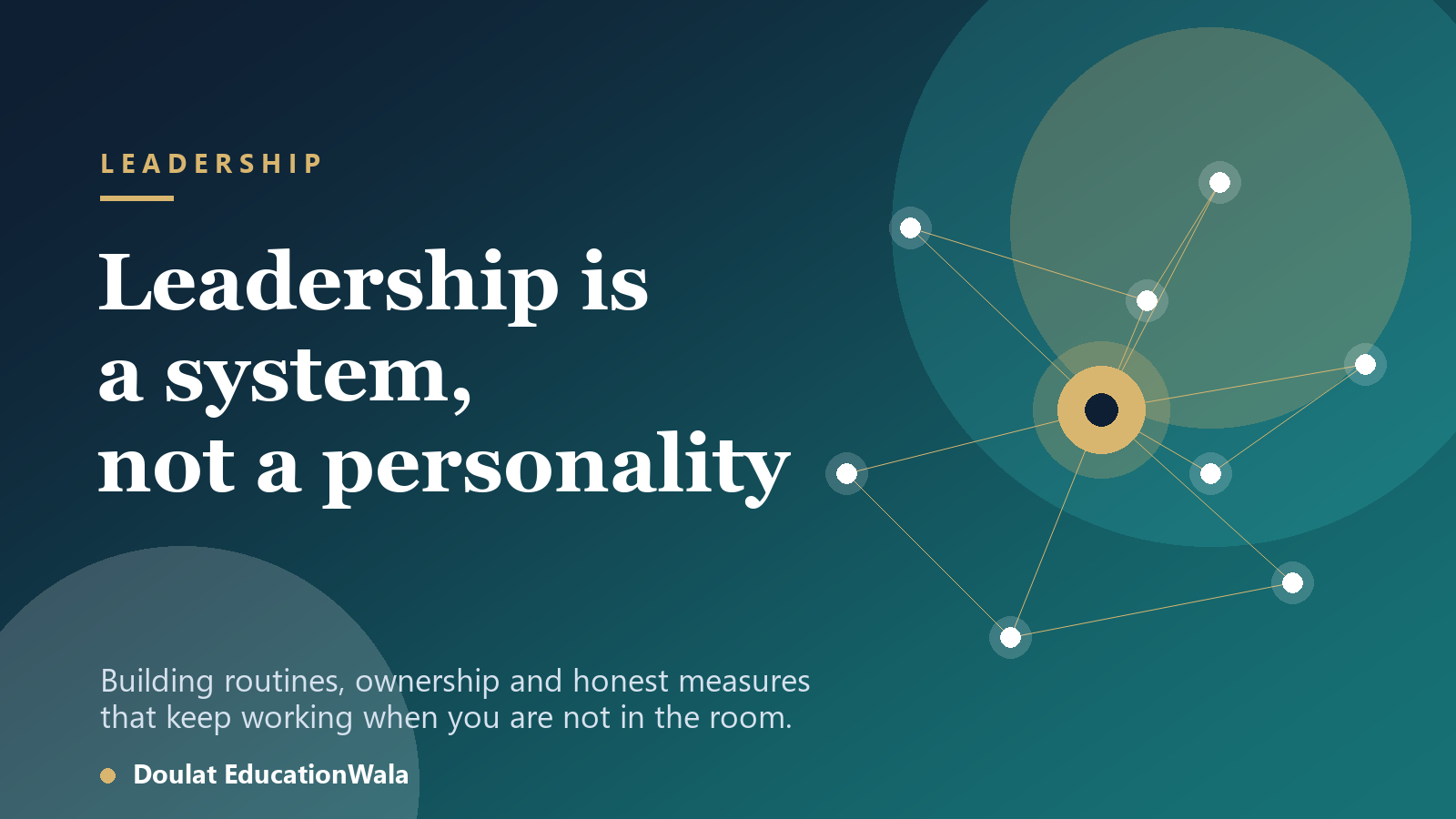
Good school leadership is not about being everywhere at once. It is about building routines, clear ownership and honest measures, so the work continues when you are not in the room.
Many school leaders end up as the bottleneck without ever meaning to. Every decision waits for them, every follow-up depends on their memory, and every report is something they have to chase. The school works, but only while the leader is present and has energy to spare.
A stronger approach is to treat leadership as a system: a set of routines and agreements that keep the work moving, whoever is in the room.
Start by writing down what really happens
Before changing anything, describe the work as it actually happens today. Take one workflow, such as how an admissions enquiry is followed up, and write each step in order: who receives it, who replies, where it is recorded and who checks it. Gaps usually show themselves within minutes: a step nobody owns, or information kept in three different places.
Give every task one owner
Shared responsibility often means no responsibility. For each step, name one person who is accountable. Others may help, but one name makes it clear who to ask and who to support. Accountability works best when it is written down and agreed, not assumed.
Measure what matters, and be honest about what you cannot measure
A simple measure, reviewed regularly, beats a long report nobody reads. How many enquiries were answered this week? How many are still waiting? Choose a few numbers that connect to real outcomes. When something cannot be measured reliably, say so openly instead of guessing. Results that can be checked build trust, with your team and with families.
Lead with humility and kindness
Systems are built for people. Ask the teachers and staff who do the work what slows them down, because they often know the fix already. Explain the reasons behind new routines, give people time to adjust, and keep your commitments. Clear standards and patience are not opposites.
Automate only after the process is clear
Tools, including AI, work best on a process that already makes sense. Automating a confused workflow only makes the confusion faster. Choose one clearly defined workflow, agree what "done" looks like, and implement it in steps you can review. Then decide, with evidence, whether to continue.
A short checklist to try this month
- Pick one workflow that regularly causes delays.
- Write down its steps and name one owner for each.
- Choose two numbers you will review every week.
- Ask your team what slows them down, and act on one answer.
- Only then consider whether a tool could help.
Leadership that lasts is built less on constant effort and more on clear systems and trusted people.
Written by Doulat EducationWala.